
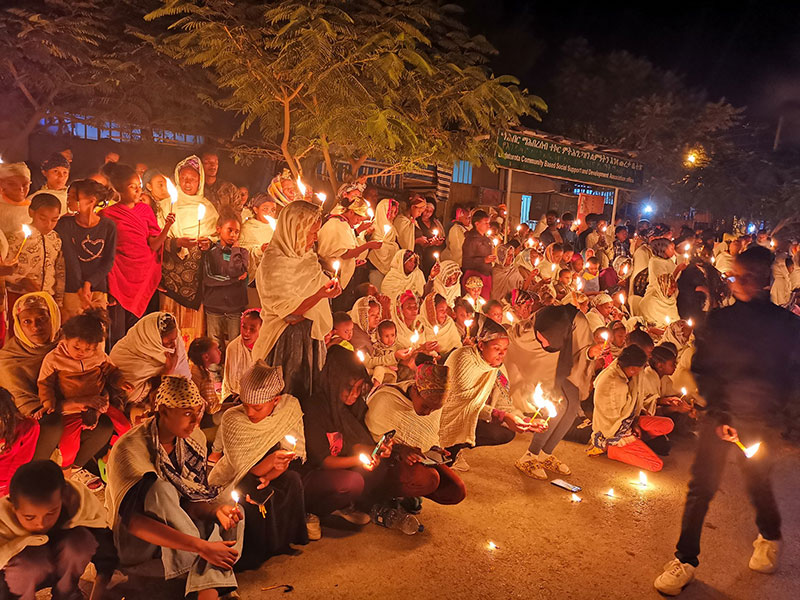
Since November 2020, armed conflict in northern Ethiopia has exposed civilians to mass killings, sexual violence, starvation, and forced displacement. More than 2 million people were displaced and approximately 600,000 were killed in what the UN International Commission of Human Rights Experts on Ethiopia (ICHREE) called “one of the darkest chapters of Ethiopia’s recent history with severe intergenerational impacts.”
A year into the conflict, the UN Human Rights Council mandated ICHREE to investigate all alleged violations and abuses of international human rights, humanitarian, and refugee law, and to preserve evidence for accountability. It found reasonable grounds to believe that Ethiopian and Eritrean government forces, along with allied militias, perpetrated violations and abuses on a staggering scale, including mass killings, widespread and systematic rape and sexual violence, including sexual slavery, starvation, forced displacement, and arbitrary detention amounting to war crimes and crimes against humanity. It also found reasonable grounds to believe that Tigrayan forces committed war crimes, including rape, sexual violence, and the killing of civilians.
A 2022 cessation of hostilities agreement paused active hostilities, but failed to end the violations in Amhara, Tigray, and Oromia. The Ethiopian government did not permit the commissioners to enter the country, and in 2024, the HRC took no action to renew ICHREE’s mandate after the Ethiopian government heavily lobbied against it. Violence, political instability, and humanitarian crisis continue to affect communities in Tigray and neighboring regions, and the risk of renewed escalation remains.
ICHREE described the government-led transitional justice process as a strategy of “quasi-compliance” used to deflect international attention and circumvent international scrutiny. No high-level perpetrators have yet been tried. Human Rights Watch said in its 2026 report that the Ethiopian government “has made little visible progress towards ensuring meaningful accountability for past and ongoing atrocities, while its transitional justice process effectively stalled.”
In the absence of credible national accountability mechanisms, documentation and preservation of evidence by Ethiopian human rights defenders has become increasingly critical to preserving any possibility of future justice.