
2021
Judith Lee Stronach – Women’s League of Burma
This award recognizes the women and thirteen member organizations that make up WLB, and their leadership in advancing human rights for women of all ethnic and religious identities in Burma. Over the past two years, CJA has partnered with WLB in its efforts to advocate for stronger legal protections for women across Burma.
Champion of Justice – Ben Ferencz
Ben Ferencz was the chief prosecutor for the United States in The Einsatzgruppen Case at the Nuremburg Tribunal and a pioneer in the field of international justice. Following his work at Nuremberg, Ferencz dedicated himself to studying and writing about world peace, going on to have a significant role in forming the International Criminal Court. At 101 years old, he continues to write and advocate for international justice and global peace.
Champion of Justice – Colette Flanagan
Collette Flanagan founded Mothers Against Police Brutality (MAPB) after her son, Clinton Allen, was shot to death by a Dallas police officer in March 2013. Her experiences seeking accountability for her son’s killing led to the creation of MAPB, which works to challenge police use of excessive and deadly force by empowering mothers and other family members who have lost loved ones to state violence.
Partner in Justice – Morrison & Foerster LLP and Dentons US LLP
This year, it is our pleasure to present this award to Morrison & Foerster LLP and Dentons US LLP, CJA’s pro bono co-counsel in Boniface v. Viliena. Together, we are seeking justice on behalf of media activists and human rights defenders targeted for speaking out against government corruption in rural Haiti.
2020

Judith Lee Stronach – Yazidi women seeking justice
In August 2014, ISIS began what would soon become recognized as a genocide against the Yazidis, an ethno-religious minority living in ISIS-held territory in Iraq. During the genocide, women and girls were systematically enslaved, tortured, and raped. Now many of these brave women are demanding justice and finding solidarity with other survivors.
Acceptance Speech by Fareeda Khalaf, ISIS survivor, Yazidi activist and member of Yazda

Champion of Justice – Gerald Gray
Gerald Gray, LCSW, MPH, a psychotherapist and licensed clinical social worker, founded CJA in 1998. His experience with torture survivors in private practice motivated him to found one of the first torture treatment centers in the country. While working there, he discovered the pervasive problem of torturers living in the U.S. This injustice spurred him to create CJA to provide legal redress to survivors of the most serious human rights violations.
Acceptance Speech by Gerald Gray

Partner in Justice – Debevoise & Plimpton
Debevoise & Plimpton LLP is a global law firm headquartered in New York, and is CJA’s partner and co-counsel on our groundbreaking cases seeking accountability for the Lutheran Church Massacre, one of the worst atrocities committed during Liberia’s back-to-back civil wars, and for the Sri Lankan military’s systematic campaign of violence against journalists during the end of its civil war.
2019
Judith Lee Stronach – Comisión Colombiana de Juristas
Hear from their Director, Gustavo Gallón Giraldo, about the current status of implementing the peace accords, and about our joint transnational efforts at justice and accountability.
Partner in Justice – Shearman and Sterling
Shearman and Sterling is CJA’s 2019 Partner in Justice awardee for its outstanding work as co-counsel in Colvin v. Syrian Arab Republic. Listen to partner Henry Weisburg reflect on the significance of the first successful war crimes case against the Assad regime.
Champion of Justice – Honorable Zeid Ra’ad Al Hussein
Former United Nations High Commissioner, the Honorable Zeid Ra’ad al-Hussein of Jordan is one of our two 2019 Champion of Justice Awardees for his fearless advocacy against atrocity crimes and those who have suffered such inhumanity. CJA’s C. Dixon Osburn interviews him on the state of human rights and what gives him hope.
Listen to Senator Dianne Feinstein as she accepts one of our two 2019 Champion of Justice Awards for her standing up to torture perpetrated by the CIA: “Without the work you do to draw the world’s attention to atrocities and pursuing those responsible, crimes against humanity will only proliferate.”
2018
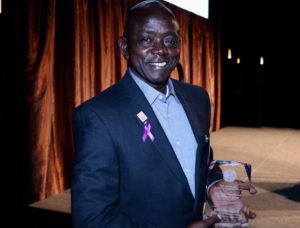
Judith Lee Stronach — Hassan Bility
Hassan Bility is the director of the Global Justice and Research Project (GJRP), a nongovernmental organization dedicated to the documentation of
wartime atrocities in Liberia and to assisting victims in their pursuit of justice for these crimes. Read More.
Partner in Justice — Mintz Group
The Mintz Group carries out investigations pertaining to legal and financial institutions. They ensure that clients are able to maintain the highest ethical standards in their business relationships.
Champion of Justice — Ambassador David Scheffer
David John Scheffer is an American lawyer and diplomat who served as the first United States Ambassador-at-Large for War Crimes Issues, during President Bill Clinton’s second term in office. He currently teaches at the Northwestern University School of Law, where he directs the Center for International Human Rights.
2017
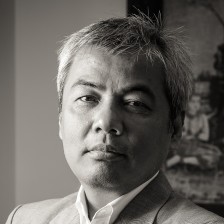
Judith Lee Stronach — Youk Chhang
Youk Chhang is the executive director of the Documentation Center in Cambodia, which is an NGO that researches and records the era of the Khmer Rouge. Chhang is also a Senior Research Fellow at the Center for the Study of Genocide, Conflict Resolution, and Human Rights at Rutgers University-Newark. In 2006, he was selected as one of TIME magazine’s “60 Asian heroes” and a year later, “Time 100” most influential people in the world.
Partner in Justice — Morgan Lewis
Morgan, Lewis & Bockius LLP is a global law firm with approximately 2000 attorneys in 30 offices across North America, Europe and Asia. They provide comprehensive litigation, corporate, finance, restructuring, employment and benefits, and intellectual property services in all major industries.
2016
Judith Lee Stronach — Colectivo de Abogados “José Alvear Restrepo”
The Corporación Colectivo de Abogados José Alvear Restrepo (CCAJAR)’s mission is to defend and promote human rights from a holistic perspective, centered on the indivisibility, integrity and interdependence of all rights and liberties. CCAJAR seeks to contribute to overcoming impunity, the consolidation of a democratic and participatory social state based on rule of law, and to consolidate a just and equitable society, with the perspective of political, economic, social and cultural inclusion and to attain a stable and lasting peace.
Partner in Justice — DLA Piper and Tara Lee
DLA Piper is a multinational law firm located in more than 40 countries throughout the Americas, Asia Pacific, Europe, Africa, and the Middle East.
Champion of Justice — Ambassador Stephen J. Rapp, former U.S. Ambassador-at-Large for War Crimes Issues
Stephen J. Rapp served as US ambassador-at-large for global criminal justice from 2009 to 2015. In that role he coordinated US government support to international criminal tribunals, including the International Criminal Court, as well as to hybrid and national courts responsible for prosecuting persons charged with genocide, war crimes, and crimes against humanity.
2015
Judith Lee Stronach — Suleiman Ismail Bolaleh
Suleiman Ismail Bolaleh is the Chairman and a founding member of the Horn of Africa Human Rights Watch Committee (HORNWATCH), the leading human rights advocacy organization in Somaliland. Suleiman has been one of the few individuals willing to speak out against corruption practices within both government and humanitarian circles. He is a strong advocate for freedom of the press, asylum seekers, refugees, prisoners, and minorities.
Partner in Justice — Chadbourne & Parke LLP
Champion of Justice — Navi Pillay, Former UN High Commissioner for Human Rights
Navi Pillay was the former U.N. High Commissioner for Human Rights Navi Pillay. Ms. Pillay, a South African national, was the first woman to start a law practice in her home province of Natal in 1967. An active opponent of the apartheid regime, she defended many anti-Apartheid activists and exposed the torture to which political detainees were subject. She has served as a judge on the South African High Court, the International Criminal Tribunal for Rwanda, and the International Criminal Court in The Hague.
2013
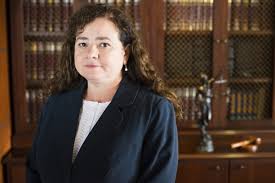
Judith Lee Stronach — Claudia Paz y Paz, Attorney General of Guatemala
Claudia Paz y Paz was Guatemala’s first woman Attorney General and has made unprecedented strides in the prosecution of organized crime, political corruption and human rights. She is the first Guatemalan law enforcement offical to prosecute those responsible for human rights abuses committed by the military dictatorship controlled by then President and General Ríos Montt, including the genocide of over 200,000 Mayans. Dr. Paz y Paz and her team have built the case against former General Ríos Montt for crimes against humanity, war crimes and genocide.
Partner in Justice Award — Latham & Watkins LLP
Latham & Watkins LLP is an American law firm founded in 1934. As of 2018, it is the world’s second highest-grossing law firm, with US$3.064 billion in annual revenue, and is widely considered one of the most prestigious law firms in the world.
Champion of Justice Award — Ahmed Salah, Coalition of Committees for Defense of the Revolution in Egypt
Ahmed Salah was a founding member of Kefaya (the Egyptian Movement for Change) in 2004 and served as a member of the Coordinators Council. He also co-founded and coordinated the youth protest movement Youth for Change.
2012
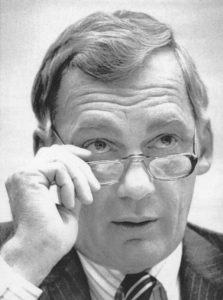
Judith Lee Stronach — Ambassador Robert White
Robert White served as the U.S. Ambassador to El Salvador during the country’s civil war, where he exposed widespread atrocities committed by the Salvadoran government and military against civilians. After retiring from the Foreign Service in 1981, White served as a Senior Associate at the Carnegie Endowment for Internation
Partner in Justice — Wilson Sonsini Goodrich & Rosati
Wilson Sonsini Goodrich & Rosati is a law firm in the United States that specializes in business, securities, and intellectual property law.
Champion of Justice — Lydia Cacho
Lydia Cacho is a Mexican journalist, feminist, and human rights activist. Described by Amnesty International as “perhaps Mexico’s most famous investigative journalist and women’s rights advocate”, Cacho’s reporting focuses on violence against and sexual abuse of women and children.
2011
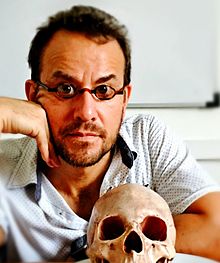
Judith Lee Stronach — Jose Pablo Baraybar
Jose Pablo Baraybar is a groundbreaking forensic anthropology. His work has been instrumental in the prosecutions of human rights abusers from Peru to the Philippines; from Haiti to Ethiopia. Mr. Baraybar has gained international renown for his investigations in Srebrenica, where 8,000 Bosnian Muslims were murdered by Serbian forces in 1995. His work there was crucial to the declaration that a genocide had taken place.
Partner in Justice — Akin Gump Strauss Hauer & Feld LLP
Champion of Justice — William H. Neukom and CA Attorney General, Kamala Harris
Kamala Harris is the junior Senator for the state of California. Prior to this, she was the Attorney General for California and District Attorney for San Francisco. William Neukom is the Founder, President, and CEO of the World Justice Project. The World Justice Project works internationally to strengthen the Rule of Law, aiming to promote the development of communities of opportunity and equity.
2010

Judith Lee Stronach — The Myrna Mack Foundation and Helen Mack Chang
The Myrna Mack Foundation is a major CJA partner in the Guatemala Genocide Case before the Spanish National Court and one of the main non-profit organizations fighting impunity within the Guatemalan legal system.The award was accepted by Helen Mack Chang who started the foundation in 1993 shortly after her sister, the Guatemalan anthropologist Myrna Mack, was assassinated by a death squad.
Partner in Justice — Cooley Godward Kronish LLP
Cooley LLP is an American international law firm, headquartered in Palo Alto, California.
2009
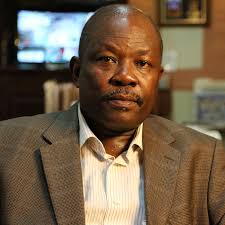
Judith Lee Stronach — Mario Joseph Bureau Des Avocats Internationaux & The Institute for Justice and Democracy in Haiti
Bureau Des Avocats Internationaux (BAI) has helped victims prosecute human rights cases, trained Haitian lawyers and spoken out on justice issues since 1995. BAI’s Raboteau Massacre Case was one of the most significant human rights cases ever in the Western Hemisphere and was a springboard for CJA’s U.S. case against Haitian human rights abuser Colonel Carl Dorélien. BAI director Mario Joseph and IJDH director Brian Concannon, Jr. accepted the award.
2008
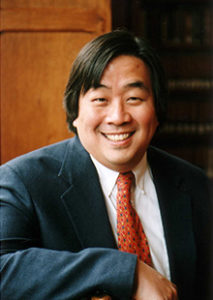
Judith Lee Stronach — Harold Hongju Koh, Dean of Yale Law School and former Assistant Secretary of State for Democracy, Human Rights and Labor
Dean Koh is a leading expert on international law and a prominent advocate of human and civil rights. His accomplishments, which are too numerous to list here, including leading a successful 1993 fight to the Supreme Court to free hundreds of Haitian refugees held in Guantánamo Bay. He has been an outspoken critic of the Bush Administration’s policies on torture, the scope of the President’s constitutional powers to authorize torture by U.S. officials, and the applicability of the Geneva Conventions to alleged combatants held in U.S. custody. Dean Koh has been invited to speak on human rights and the next Presidential Administration.
2007
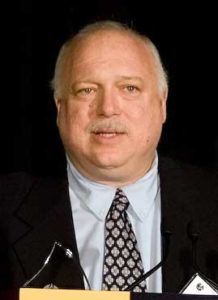
Judith Lee Stronach Award — Paul Hoffman, U.S. Human Rights and Civil Liberties Attorney
Mr. Hoffman is a leading human rights and civil liberties attorney of the firm Schonbrun DeSimone Seplow Harris & Hoffman LLP. Mr. Hoffman is one of CJA’s founders and has served as lead counsel on numerous human rights cases in U.S. courts, including the landmark case against Philippine ex- President Ferdinand Marcos. Mr. Hoffman chairs the International Executive Committee of Amnesty International and is the former chair of the ACLU’s International Human Rights Committee.
About Judith Lee Stronach

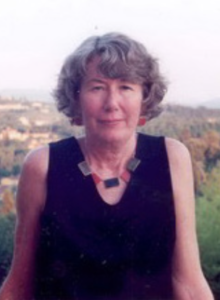 Judith Lee Stronach (1943 – 2002) was a committed human rights activist who was instrumental in the founding of CJA. Judith was known for her love of poetry, love of teaching, and her spiritual practice.
CJA was originally conceived as a project of Amnesty International USA. The transition to an independent organization was made possible through a generous gift from the Judith Stronach Fund for Non-Violent Social Change of the Vanguard Foundation. Judith’s insights on the role of humanity and the therapeutic effect of seeking redress helped shape CJA’s original mission. Judith believed deeply in the transcendent value of the humanity of all persons.
Judith supported a wide variety of human rights causes and wrote often of her opposition to torture and other human rights abuses. When she first learned of CJA she was drawn to the aspect of our work that helps torture survivors and their families to seek redress. She also sought to understand the role of the torturer in society and the therapeutic effect of holding torturers to account. As she stated in an article published in the Summer 2000 issue of Turning Wheel, The Journal of Socially Engaged Buddhism:
[I see] the torturer not as someone different or other, but as a product of the whole society. I saw that bringing torturers to trial was not only a matter of justice, but of healing the society that had split off these unwanted parts of itself, of making it whole.
» Read the full article
Judith was prescient in recognizing the role that the arrest of General Pinochet in London would play in ending the culture of impunity in Chile and healing a society. At the time of the arrest, she wrote:
The General’s arrest ended decades of avoidance of the executions and disappearance of 3,000 people and the torture of tens of thousands of others. Before, the victims had felt abandoned, stigmatized and cheated. The publicity re-traumatized many by stirring old memories, but it also allowed a healing process to begin for others. Victims who had lived with shame, paranoia and embarrassment now could experience some measure of legitimacy.
Judith’s appreciation of the need for justice combined with her empathy for survivors who had suffered torture or whose loved ones had been killed or disappeared, made her one of CJA’s most outstanding and valued supporters. CJA’s work continues to be animated by her spirit. We are also grateful to Judith’s husband, Raymond Lifchez, who remains a strong supporter of our organization.